Second story above the existing footprint
Adding a second story above the existing footprint is a structural and architectural rework, not just an addition.
How second story above the existing footprint actually works.
Adding a second story above the existing footprint is a structural and architectural rework, not just an addition. The existing foundation has to carry the new load (often requiring reinforcement), the roof comes off, exterior walls extend, a new floor system installs over the original ceiling, and new exterior cladding and roofing complete the envelope. The existing first floor is effectively unusable for 8–14 weeks of the project, so this is usually a move-out remodel.
The decision between adding up vs. adding out usually comes down to lot constraints (no setback room for a ground-floor addition) and architectural fit (some 1960s–80s ranches don't read well as two-story). When second-story is right, it's right; when it isn't, a ground-floor addition reads better.
The execution details that decide outcome.
Foundation reinforcement. Some 1960s–70s slab foundations weren't designed for a second story; verify before assuming the existing slab carries.
Roof replacement, not just modification. The cleanest second-story tie-in usually starts with a full re-roof.
Move-out timing. 8–14 weeks of first floor disruption is typical; plan housing accordingly.
Other home additions outcomes I've built.
Read the Clay County home additions guide.
Tier-by-tier costs, the full permit walkthrough, and the FAQs Mark hears most often.
Read the guideRecent field notes.
Florida ADU Rules in 2026: What HB 1239 Changed (and What It Didn't)
Florida HB 1239 (2026) preempts some local ADU zoning — but HOA covenants still apply. Here's what actually changed.
Read it
Home Addition Foundation Options for Florida Flood Zones
Foundation options for NE Florida additions in flood zones — slab, raised slab, pier-and-beam, elevated — and what FEMA requires.
Read it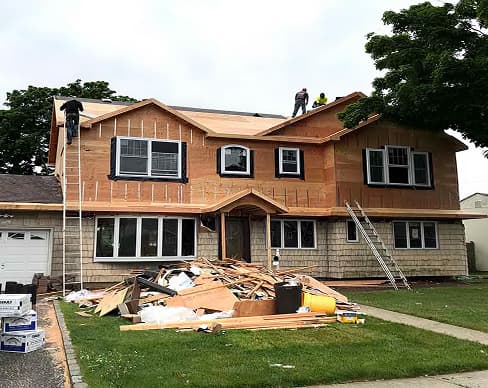
Room Addition Roof Tie-In Options: How to Match Existing in NE Florida
Three room-addition roof tie-in approaches for NE Florida — gable, hip, shed — and how to pick the right one for your house.
Read it
See your range in 90 seconds.
Tell me about your project — you'll see a real budget range mid-flow, and I'll call within 24 hours with a fixed quote.