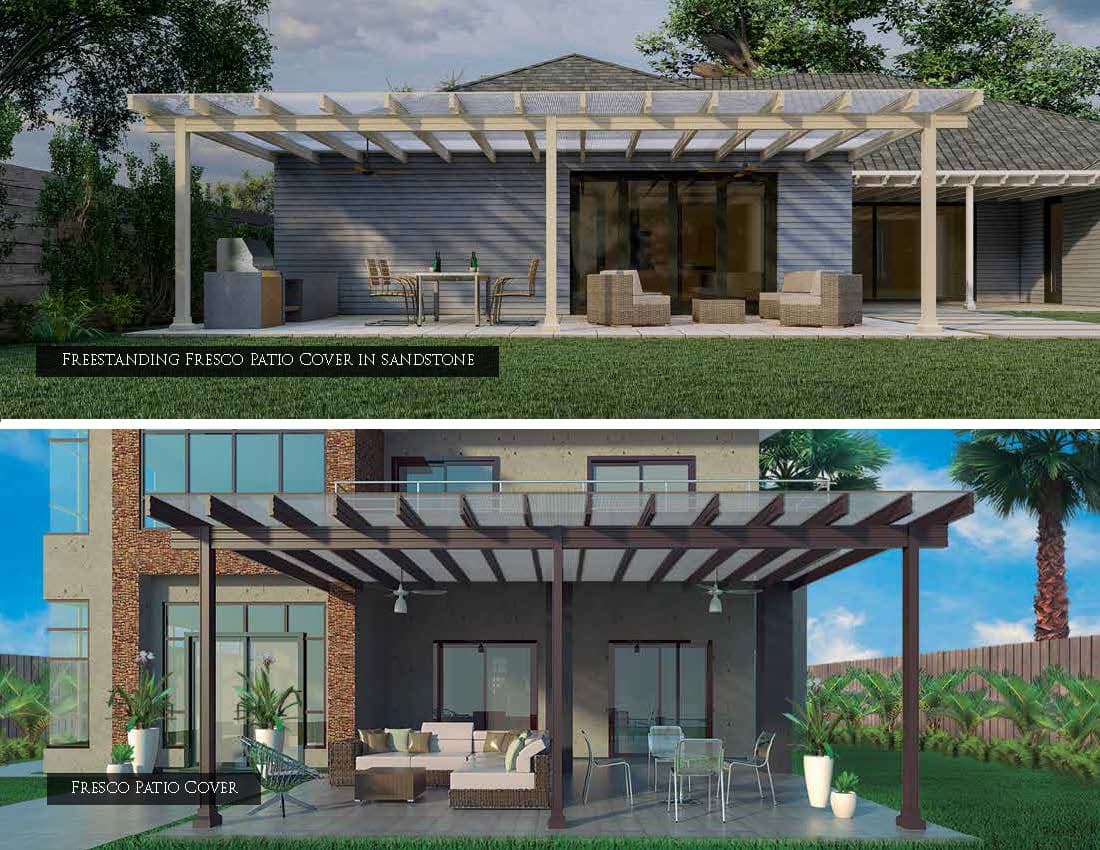
The word "sunroom" covers a wide range of structures in NE Florida — from a screened porch with a roof to a fully air-conditioned room with insulated walls that counts as conditioned living space on the property tax bill. The cost varies by roughly 6× across that range, and the quote you're looking at depends entirely on which kind of sunroom you actually want.
Here's how 2026 Jacksonville and Clay County sunroom pricing breaks down by what you're actually getting, and the questions that decide which tier is the right fit. Same framing as the Clay County sunroom cost & permits guide, expanded with Jacksonville-specific code, climate, and inspection detail.
The three real tiers
Tier 1: Three-season screen room — $12,000 to $24,000
A screen room is exactly what it sounds like — a covered, screened space that's open to outside air. It has a hard roof (insulated or non-insulated aluminum, polycarbonate, or shingled tie-in to the house roof), screened walls, and a concrete or paver floor. It is not climate-controlled. Florida summer humidity is the room's humidity; winter cool nights are the room's temperature.
What's included at this tier:
- Engineered structure to local wind code (130 mph inland NE Florida, 140+ mph east of the Intracoastal)
- Permit pulled, framing inspection passed, final inspection passed
- Aluminum frame, no-see-um or pet-mesh screening, weatherized doors
- Tie-in to existing concrete slab or new slab if needed
- Roof tie-in to existing house roof
Cost variation within Tier 1 comes mostly from size (12×16 at the lower end, 20×24 at the upper) and roof type (single-pan aluminum at the low end, insulated panel with skylights at the upper).
Three-season screen rooms work best for households that want outdoor living March through November, plus dry winter afternoons. They don't work well as a year-round room — November through February is too cool for most uses, and June through September is too humid most of the day.
For more on three-season specifics, see the screen room cost article.
Tier 2: Four-season climate-controlled — $32,000 to $58,000
This is the sunroom that's actually usable every day of the year. Insulated wall panels (typically a vinyl or aluminum skin with foam core), insulated roof, vinyl or aluminum thermal-break window walls (single or dual-pane low-E glass), and dedicated HVAC. The space is sealed against humidity and conditioned by either a mini-split heat pump or an extension of the house's central HVAC.
What you get at Tier 2:
- Conditioned, climate-stable room year-round
- Dual-pane low-E glass walls — clear views, but real insulation value
- Insulated roof and walls — typically R-13 to R-19
- Dedicated HVAC — usually a 12k or 18k BTU mini-split
- Electrical for lighting, outlets, possible ceiling fan
- Often counts as bonus space for square footage purposes, but typically not conditioned living space (depends on construction details)
The decision point between mini-split and central HVAC extension: a mini-split is faster to install, doesn't tax the existing system, and costs $3,500 to $5,500 installed. Extending central HVAC requires the existing system to have spare capacity (verify with a Manual J load calculation) and adds $4,000 to $7,500 in duct work, registers, and balancing — but the room runs off one thermostat with the house.
Cost variation: size, glass type (single vs dual-pane low-E vs argon-filled), HVAC choice, and finish level. A 14×18 four-season with a mini-split lands around $34,000 to $42,000. A 20×24 with central HVAC extension and premium glass lands $48,000 to $62,000.
Tier 3: Conditioned living space addition — $65,000 to $130,000+
This is a true addition that meets Florida Energy Code for conditioned living space — same insulation, same window standards, same HVAC integration, same code requirements as any other room in the house. The "sunroom" description here is largely about the heavy glass and the location facing the yard; structurally and energetically, it's a room addition.
What's different from Tier 2:
- Walls meet FBC R-20 minimum insulation (vs R-13 to R-19 in Tier 2)
- Windows must meet U-factor and SHGC requirements for Climate Zone 2 (most of NE Florida) — Tier 2 sunroom glass typically doesn't
- HVAC must integrate with whole-house system per the original Manual J — not a standalone mini-split
- Foundation, framing, roofing, electrical, and plumbing all permitted and inspected as a habitable space addition
- Adds to the house's conditioned square footage on the property record (and on insurance, and on tax assessment)
Tier 3 is what you build when you want a permanent additional room — a sun-facing family room, an office, a guest bedroom adjacent to the patio — not just a season-extender for the patio. Square-footage-wise, the cost difference between Tier 2 ($45/sq ft of glass area) and Tier 3 ($350+/sq ft of finished area) reflects the difference between a porch-grade structure and a habitable-grade structure.
For more on what counts as conditioned space, see the year-round sunroom and Florida climate article.
The four costs Tier 1/Tier 2 quotes usually leave out
1. Slab condition
The existing slab — if you're building over an existing patio slab — has to meet the engineer's spec for footing depth and reinforcement. About 35% of Jacksonville sunroom projects discover the existing slab is undersized at the engineer's walkthrough. Either it gets cut out and re-poured, or the entire footprint gets a new slab. Add $2,500 to $7,000 depending on size.
2. Roof tie-in upgrade
If your house has a 20-year-old shingle roof and the sunroom is going up under a long tie-in, the tie-in flashing needs new shingle integration that often involves replacing several courses of existing shingles. If the roof is more than 15 years old, the right call is sometimes to do the tie-in repair plus a small adjacent roof patch with matched shingles. Add $500 to $2,500 for the tie-in beyond what a normal install would cost.
3. Panel capacity / sub-panel
A four-season sunroom with a mini-split, lighting, and outlets typically draws 25–35 amps. If the existing house panel doesn't have 2 spare 240V slots and a 30-amp single, a sub-panel for the sunroom solves the problem cleanly. Add $1,500 to $3,500 for the sub-panel.
4. HOA architectural review
Most NE Florida HOAs require architectural review for any structure over a certain footprint. Sunroom permits often get held up not by the county but by the HOA architectural committee waiting for paperwork. Add $100 to $400 in HOA fees and 2 to 6 weeks in calendar time. Submit to the HOA before paying the engineer to keep the timeline honest.
What the timeline actually looks like
For a Tier 2 four-season sunroom in 2026 NE Florida:
- Week 1. Site walkthrough, slab assessment, electrical scope, HOA submission.
- Weeks 2–4. Engineering drawings produced; HOA approval; building permit submitted.
- Weeks 4–7. Plan review (Clay 2–3 weeks, Duval 3–5 weeks, St. Johns 4–6 weeks).
- Week 8. Slab work if needed.
- Week 9. Posts and framing.
- Week 10. Roof, glass walls, electrical rough-in.
- Week 11. HVAC install, electrical trim, screen install if applicable.
- Week 12. Final inspection, punch list.
Glass walls are typically the schedule-critical material, with lead times of 4 to 8 weeks for stocked sizes and 8 to 14 weeks for custom. Order at permit submission, not at permit approval.
How to use the estimator
The Tivey 90-second estimator walks you through size, climate-controlled vs three-season, and finish level. The range you see at the end is the tier range above, scaled to the specifics you select.
Related reading
- Sunroom Cost & Permits in Clay County, FL — Clay-specific cost + permit walkthrough
- Sunroom Permit Clay County and Jacksonville — what the permit process looks like
- Year-Round Sunroom and Florida Climate — what makes a sunroom actually four-season
- Screen Room Cost in Jacksonville — Tier 1 cost details
- Patios & Sunrooms — Tivey Construction — what's included in a Tivey-led sunroom project
Ready when you are.
Tell me about your project — you'll see your real budget range mid-flow, and I'll call within 24 hours. No spam, no call center, just me.